
NCA Shares Best Practices on Equipment Certification and Type Approval with Mozambique Regulator
NCA Shares Best Practices on Equipment Certification and Type Approval with Mozambique Regulator
June 9, 2026 – The National Communications Authority (NCA) hosted a virtual benchmarking session with the Mozambique Communications Regulatory Authority (INCM) to share knowledge and best practices on equipment type approval and telecommunications equipment certification.
The engagement formed part of INCM’s efforts to strengthen its regulatory framework and enhance its institutional capacity in the area of equipment type approval and testing. Specifically, the session sought to provide insights into the NCA’s equipment type approval processes, operational and technical testing models, challenges relating to international standards and equipment certification, as well as the infrastructure and specialised human resource requirements needed to support such operations.

Deputy Director-General in charge of Technical Operations,
Mr. Salifu Suleman welcoming participants
Setting the stage for the discussions, the Deputy Director-General for Technical Operations, Mr. Suleman Salifu, highlighted the importance of collaboration among regulatory authorities and expressed the NCA’s commitment to knowledge sharing and regional cooperation in advancing effective communications regulation.
Speaking on behalf of the Mozambique delegation, Mr. Edmundo Alberto, Director of Radiocommunications and Inspection at INCM, noted that the engagement was important in helping the Authority better understand Ghana’s type approval regime, the scope of the NCA’s regulatory mandate, the operational model of its testing laboratory, and the processes involved in ensuring compliance of communications equipment entering the market.

Mr. Peter Onyekere, Manager, Regulatory Administration Division
engaging the participants
During the technical discussions, Mr. Peter Onyekere, Manager of the Regulatory Administration Division at the NCA, explained, among other things, that the Authority has developed Minimum Technical Specifications and Requirements for terminal equipment, which are currently undergoing the necessary processes for gazetting. According to him, the initiative is aimed at guaranteeing the quality of communications services delivered to consumers in Ghana.
He further noted that the specifications seek to promote efficient spectrum utilisation, ensure network compatibility, address health, safety, and environmental concerns, and curb the proliferation of counterfeit and substandard communications equipment on the Ghanaian market.
He added that the laboratory has played a key role in training and capacity building for a number of African countries, facilitating knowledge transfer and enhancing technical skills among regulatory authorities.
The meeting provided a valuable platform for both institutions to exchange experiences, discuss emerging regulatory challenges, and explore opportunities for future collaboration in strengthening communications regulation across the region.
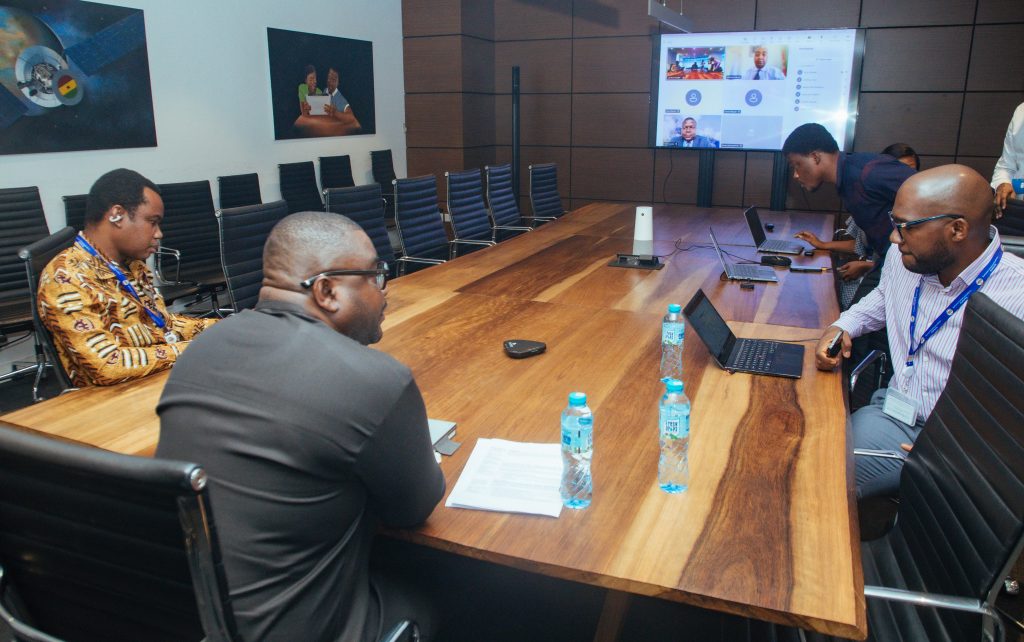
Participants on the virtual platform during the benchmarking session
